

In the introduction to her book, A Yorkshire Cookbook, Mary Hanson Moore remembers her childhood in the old West Riding of Yorkshire. In particular, she remembers Thursday Baking Day:
‘I can still remember the warm, spicy smells that greeted me upon my return from school, as I opened the door of the house and went inside our tiny living-room. Our back-to-back, terraced house was in a long row facing an identical row across about twenty feet of old ‘setts’, those square cobblestones of the North. The living-room was also the kitchen, with a small, shallow stone sink in one corner, and the ‘range’ in the middle of one wall.’

‘The cast-iron range was both the pride and sorrow of my mother. It had to be blackleaded each week in order to satisfy both tradition and her own Yorkshire pride. To own such a range and not keep it gleaming was a sign of Southern decadence… I always wondered how we all knew that, since no one in my street, at any rate, had ever travelled out of Yorkshire!’
‘On this range, my mother did all her cooking, using heavy, black, iron pans on top of the coal fire, and the oven at the side for baking. This was where the sorrow part came in, for in order to get a good baking temperature, the fire had to be stoked at the crack of dawn and kept roaring hot, even in summer, lest the oven ‘fall’. And, since the living-room opened straight out on to the street, the door hadn’t to be opened widely, or closed with a bang, in case the same thing happened.’
‘The result was, each Thursday … when I came home from school for dinner, and on my return at four o’clock, a white wooden table laden with delicious goodies – and a mother with a headache. In those days, I didn’t realise what a heavy strain those wonderful baking days put on my mother and indeed all the housewives in the area.’
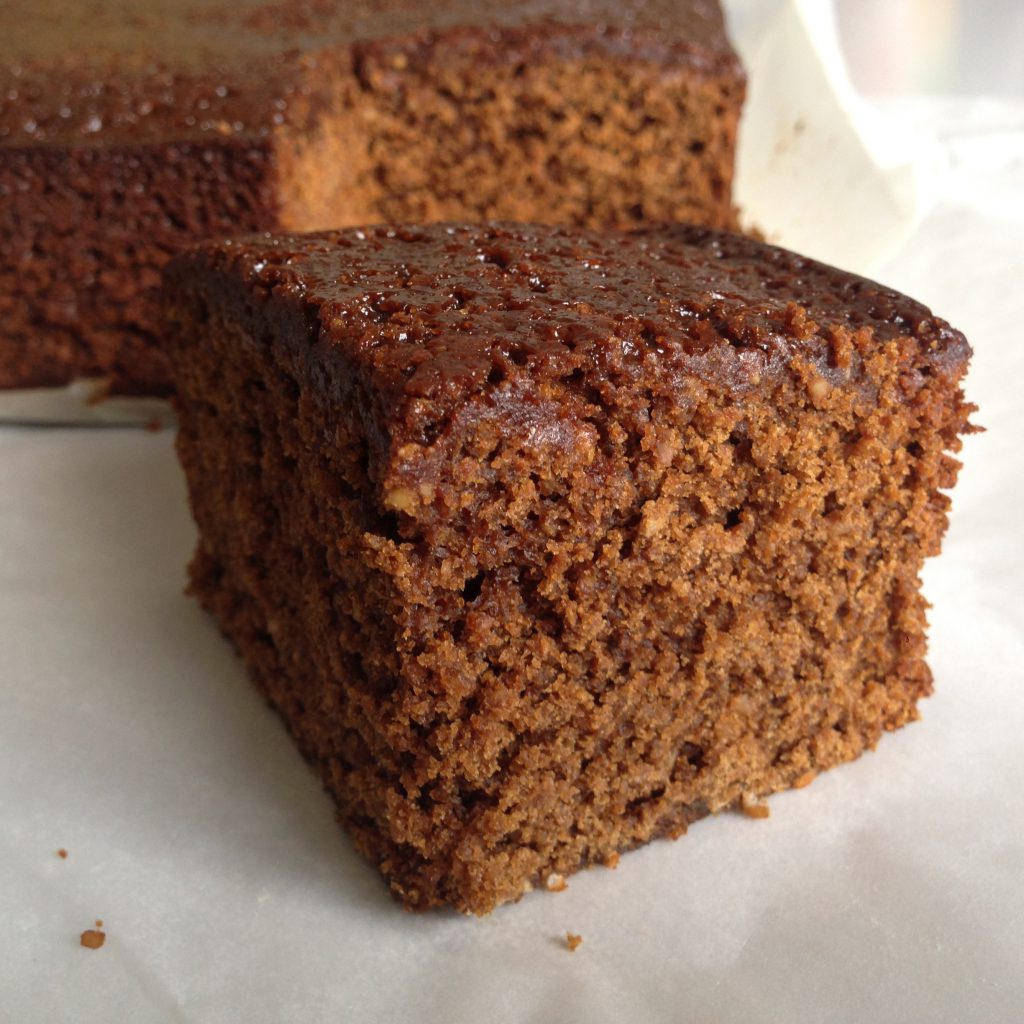
‘Each Thursday, on the big table, would be spread large, golden, crisp-topped loaves of bread, enough for a week’s eating, for no Yorkshire housewife then would dream of buying her bread, unless in a dire emergency. There would be one large fruit-cake, redolent of cinnamon and mixed spice; trays of small buns, spotted with currants … shortcrust almond tarts, crisp and golden, with a delicious splodge of jam hidden beneath the almond mixture; saucer-sized Yorkshire curd tarts, spicy and faintly cheesy; and the large square slab of parkin, brown and and sticky on top, adding its ginger scent to the rest.’
‘There were other things too, baked for special occasions, perhaps for a change, or simply to use up left-over bits and pieces. ‘Fat Rascals’ were among the latter – scraps of shortcrust pastry rolled-out, sugared and sprinkled with a few currants, then rolled gain into thick, flat cakes before baking. Spread with butter when hot from the oven, they were delicious.’

‘There were Yorkshire teacakes, flat thick cakes of bread enriched with currants, marvellous for toast and jam; custard pies, or egg pies as they were sometimes known, small deep tartlets filled with nutmeg-flavoured set custard and eaten cold; there were gingerbreads, totally different from the Parkin, and with many variations; and Christmas-time added to the long list, with its cakes and pies, trifles and syllabubs.’
*
Source: Mary Hanson Moore. A Yorkshire Cookbook (1980). David & Charles


